Buying a House in Japan in 2026: What's New for Foreigners
New paperwork, same open door. Here is everything that changed this year for foreign buyers, explained simply, with a checklist to buy with confidence.
 By Houses of Japan6 min read
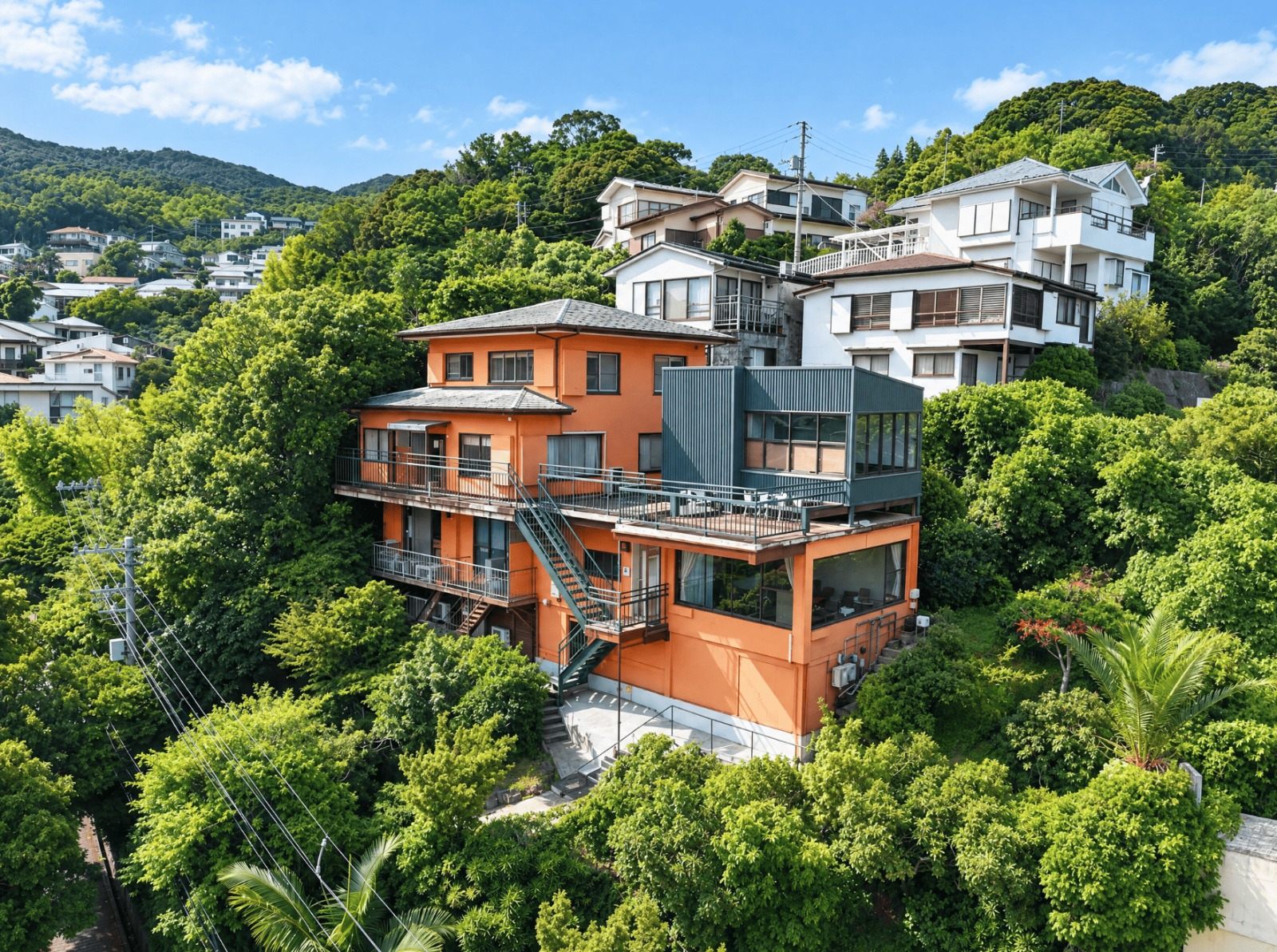
A hillside villa in Ito, Shizuoka, from our listing. See the house →
If you followed the headlines this year, you may have read that Japan was "cracking down" on foreign buyers. The reality is much simpler, and much more encouraging. In 2026, Japan is still one of the very few countries in the world where you can buy a house and the land under it, in your own name, with no visa, no residency and no nationality limit.
What did change is the paperwork. Three new steps now come with a purchase, and a new security law targets a handful of sensitive zones. None of them closes the door. Here is what each one means for you, in plain words.
In 30 seconds
- Foreigners can still buy freely. No ban, no quota, no special tax.
- Since October 5, new owners declare their nationality at registration. It stays private.
- Since April 1, buyers living abroad file a short report within 20 days, and owners keep their address up to date on the register.
- A new permit is coming only for land near some defense sites and on remote border islands.
The short answer: yes, you can still buy
There is no ban, no quota and no extra tax for foreign buyers. You get exactly the same rights as a Japanese buyer, including full freehold ownership of the land, which you can keep for life and pass on to your family.
Earlier this year, the government did study tighter rules for foreign buyers of city condos. In June 2026, those plans were put on hold: Ministry of Land data showed that only about 3% of new condo buyers in Tokyo live abroad, far too few to explain rising prices. In August, a government expert panel then recommended better monitoring of how land is used, not a purchase ban.
New step 1: your nationality goes on fileSince October 5, 2026
When you register as the new owner of a home, you now declare your nationality to the Legal Affairs Bureau. Three things are worth knowing:
- It applies to every individual buyer, Japanese buyers included. It is a statistic, not a filter: no purchase is refused because of it.
- It stays private. Your nationality does not appear on the public property certificate that anyone can request.
- It is easy from abroad. A copy of your passport page showing your nationality, signed by you as a true copy, is the usual document.
Good to know: the judicial scrivener (shiho shoshi) who handles your registration prepares this for you, in the same file as the rest of the paperwork.
New step 2: a short report when you buy from abroadSince April 1, 2026
If you live outside Japan, your purchase is now reported to the Ministry of Finance, through the Bank of Japan, within 20 days of buying. Before April, buying a home to live in was often exempt. Now the report applies to every property bought by a non resident, whatever the purpose.
It is a short form, it can be filed online, and your real estate agent or another representative living in Japan can file it for you. Just ask for it to be on the closing checklist, and it is done.
New step 3: keep your address up to dateSince April 1, 2026
Owners now have two years to update the property register after moving or changing their name. If you skip it and then ignore a reminder, a fine of up to ¥50,000 can apply. Moved before April 2026 without updating? You have until March 31, 2028.
For owners living abroad, the simplest habit is to tell your scrivener whenever your address changes, and to keep a tax representative in Japan (more on that in the checklist below).
Sensitive zones: a new permit, for a few specific places
On November 24, 2026, the lower house approved a bill that adds a permit for buying land in designated zones: roughly 1 km around certain defense and coast guard facilities, and uninhabited border islands. Foreign governments and military linked buyers will in principle not be allowed to buy there. Once the law is passed, the new rules are expected to start within 18 months.
In practice, for the countryside houses, seaside cottages and city homes our readers look at, nothing changes. And if a house ever sits inside one of these zones, your agent sees it right away and the permit simply becomes one more step of the process.
Good news you may have missed
The land is yours
Freehold ownership, for life, that you can sell or pass on to your heirs, exactly like a Japanese owner.
A low yearly tax
The property tax is about 1.4% a year of the official valuation, which is often far below the price you paid.
No trip required
With an agent, a scrivener and documents sent by mail, a purchase can be completed entirely from abroad.
So much choice
About 9 million vacant homes nationwide, and some towns even offer renovation grants to people who move in.
Your 2026 buying checklist
- Pick your house and make an offerAlways through a licensed real estate agent, who checks the property and the zone for you.
- Plan your budgetCount about 8 to 12% on top of the price for fees and taxes. On very cheap houses, fixed costs weigh more: agents can charge up to ¥330,000 on homes of ¥8 million or less.
- Prepare your documentsA passport copy showing your nationality, and an official proof of address. For buyers living abroad, this is usually a notarized statement of address from your country.
- Sign, pay and registerThe scrivener registers you as the new owner and includes your nationality declaration.
- Within 20 days: the reportIf you live abroad, your agent or representative files the short Ministry of Finance report.
- Name a tax representativeOwners living abroad appoint someone in Japan to receive the yearly property tax notice and pay it on time.
- Keep your details currentWhen you move, update the register within two years. One email to your scrivener is enough.
The bottom line
2026 added a few forms, not a single wall. Japan's door is as open as ever to foreign buyers, and with the right team, the new steps happen quietly in the background while you focus on the fun part: finding the house.
And the houses are still there, still beautiful, and often still surprisingly affordable.